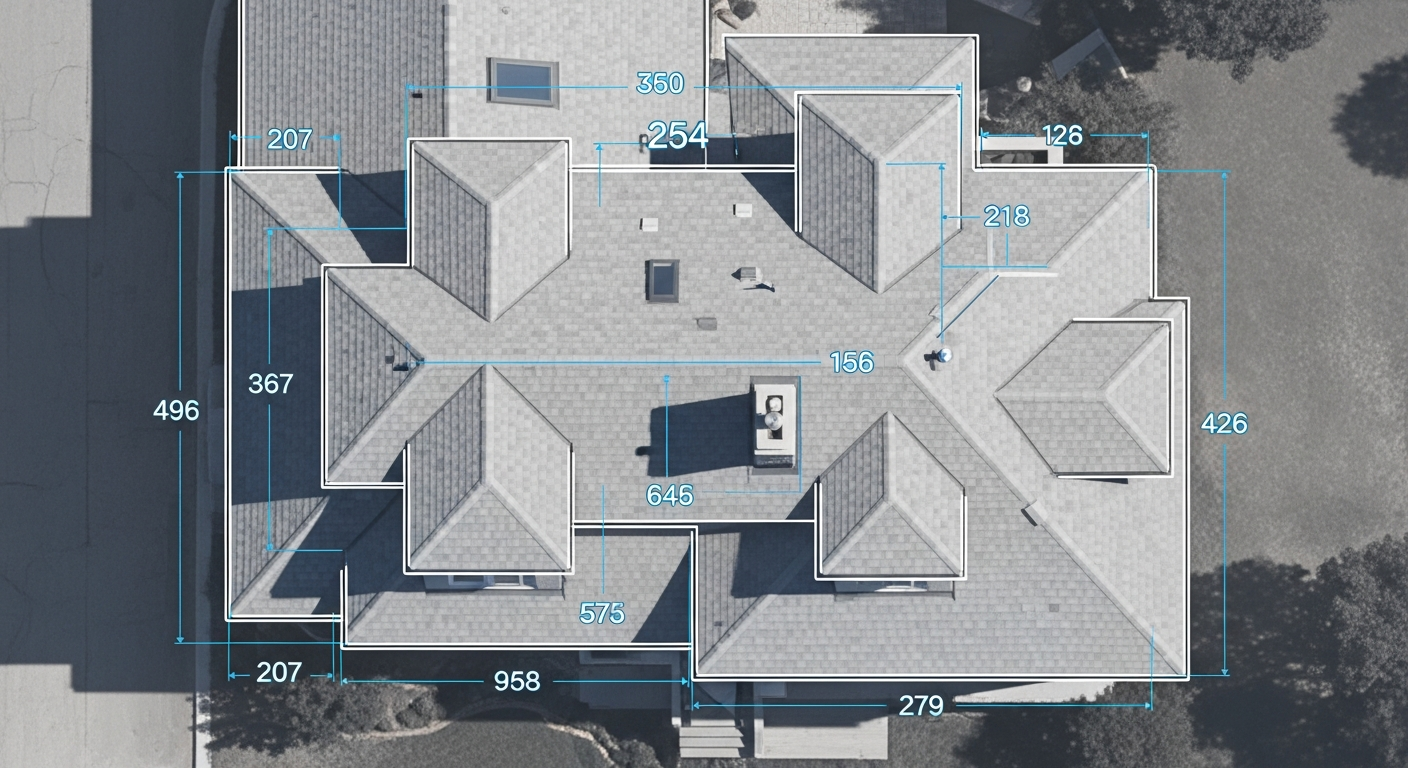
If you're a roofing contractor, you've almost certainly used EagleView. They pioneered aerial roof measurement reports and have been the industry standard for over a decade. But the roofing tech landscape has changed dramatically, and newer tools like RoofTap are offering a different approach to the same problem.
This isn't a hit piece. EagleView is a solid product. But the two platforms serve different needs at very different price points, and understanding those differences can save you thousands of dollars a year.
The Quick Comparison
| Feature | RoofTap | EagleView |
|---|---|---|
| Price per report | $9.95 (or free with subscription) | $15-87 depending on report type |
| Delivery time | Instant (under 60 seconds) | Hours to days |
| Accuracy | ~95% | ~98.77% (per their own studies) |
| Data source | Satellite imagery + AI | Proprietary aerial imagery + manual QA |
| ESX file export | Coming soon | Yes |
| Material takeoffs | Yes (shingles, metal, tile) | Yes |
| Waste factor calculation | Yes (adjustable) | Yes |
| 3D visualization | Yes | Yes (premium reports) |
| API access | Yes | Yes (enterprise) |
| Minimum order | None | Varies by plan |
Pricing Breakdown
This is where the difference hits hardest. EagleView's pricing depends on the report type:
- EagleView QuickSquares: ~$15-25 (basic measurements)
- EagleView PremiumReport: ~$35-55 (detailed measurements with 3D model)
- EagleView WallsReport: ~$60-87 (includes wall measurements for siding)
RoofTap charges $9.95 per report with no subscription, or reports are included free with any RoofTap subscription plan. If you're running 20 reports a month, that's roughly $200 with RoofTap versus $700-1,100 with EagleView PremiumReports.
Over a year, the savings add up to $6,000-$10,000 - real money for a roofing business.
Accuracy: The Honest Truth
Let's address accuracy head-on because this is EagleView's strongest selling point.
EagleView claims 98.77% accuracy based on their own validation studies. They achieve this through a combination of proprietary aerial imagery (often captured by their own fleet of planes), LiDAR data in some markets, and human quality assurance reviewers who check measurements before delivery.
RoofTap uses satellite imagery combined with AI measurement algorithms. Our accuracy sits around 95% for total roof area. For the vast majority of residential roofing jobs, this difference is negligible - it might mean ordering one or two extra bundles of shingles as a buffer.
When accuracy matters most
- Insurance claims: If you're working with insurance adjusters, EagleView's reports carry more weight because adjusters are familiar with the format. Some carriers specifically require EagleView reports.
- Complex commercial roofs: Large commercial roofs with dozens of penetrations, multiple levels, and unusual geometry benefit from EagleView's higher accuracy and manual QA process.
- Standard residential re-roofs: A 95% accurate report is more than sufficient. You're already accounting for waste factor in your material orders.
When accuracy matters less
Most residential roofers add 10-15% waste factor to their material orders regardless of which measurement tool they use. The 3-4% accuracy difference between RoofTap and EagleView is absorbed by that waste factor. You're not going to lose money on materials because of a 3% measurement variance when you're already padding your order by 10%.
Speed: Where RoofTap Wins Decisively
This is RoofTap's biggest advantage. You enter an address, and you have a complete roof measurement report in under 60 seconds. No waiting. No refreshing your email. No telling a homeowner you'll get back to them tomorrow with a quote.
EagleView delivery times vary:
- QuickSquares: Usually within a few hours
- PremiumReport: 2-24 hours typical, can stretch to 2-3 business days during storm season
- Rush delivery: Available for a surcharge, but still not instant
If you're sitting in a homeowner's kitchen and they want a quote right now, RoofTap lets you pull up the report, calculate materials, and present a price on the spot. With EagleView, you're telling them you'll email the estimate later - and in that gap, your competitor might close the deal.
Material Takeoffs
Both platforms calculate material quantities, but they approach it differently.
EagleView provides detailed material lists based on their measurements. Their reports include quantities for shingles, underlayment, flashing, ridge cap, drip edge, and more. The material lists are well-organized and familiar to suppliers.
RoofTap generates material takeoffs with adjustable waste factors. You can toggle between material types (3-tab shingles, architectural shingles, metal panels, tile) and see quantities update in real time. The interactive nature makes it easy to show homeowners different material options during a sales presentation.
ESX File Support
This is one area where EagleView still has a clear advantage. ESX (EagleView SmartExport) files are the industry standard for importing roof measurements into estimation software like Xactimate, HOVER, and various ERP systems.
EagleView supports ESX export on all their premium reports. RoofTap does not yet support ESX export, though it's on our development roadmap. If your workflow depends heavily on ESX file imports, this is a genuine reason to stick with EagleView for now.
Integration With Your Workflow
EagleView integrates with most major roofing and insurance platforms. They've had years to build these connections, and if you're using AccuLynx, JobNimbus, or Xactimate, EagleView likely has a direct integration.
RoofTap is built into the broader ServiceTap platform, which means your roof reports connect directly to your CRM, estimates, scheduling, and invoicing. There's no export/import step - you generate a report and it flows into an estimate automatically. If you're using RoofTap as your primary business platform, this integrated workflow saves significant time.
When to Use EagleView
- You need ESX file exports for insurance or Xactimate workflows
- You're working complex commercial roofs where 98%+ accuracy is critical
- Your insurance partners require EagleView-format reports
- You need wall measurements for siding projects
- You have an existing workflow built around EagleView integrations
When to Use RoofTap
- Speed matters - you want reports instantly during sales appointments
- You're price-sensitive and running high volume (20+ reports/month)
- You want roof reports integrated with your CRM, estimates, and invoicing
- You primarily do residential re-roofs where 95% accuracy is sufficient
- You're tired of paying $35-87 per report
Can You Use Both?
Absolutely. Many contractors use RoofTap for the initial sales visit (instant report, quick estimate, close the deal) and then order an EagleView report for the final material order on larger or more complex jobs. This hybrid approach gives you speed when it matters and precision when you need it.
The Bottom Line
EagleView is the more accurate, more established tool with broader integrations and ESX support. RoofTap is faster, dramatically cheaper, and integrates directly with your business management workflow. Neither is universally better - the right choice depends on your volume, your workflow, and whether instant delivery or maximum accuracy matters more to your business.
Try a free roof report and see how RoofTap's speed and pricing compare for your typical jobs.